Resources and legal information
Immigration and Refugee Legal Information
Canada’s immigration system is one of the country’s largest administrative systems. Rules and processes change frequently, and navigating it can be a challenge.
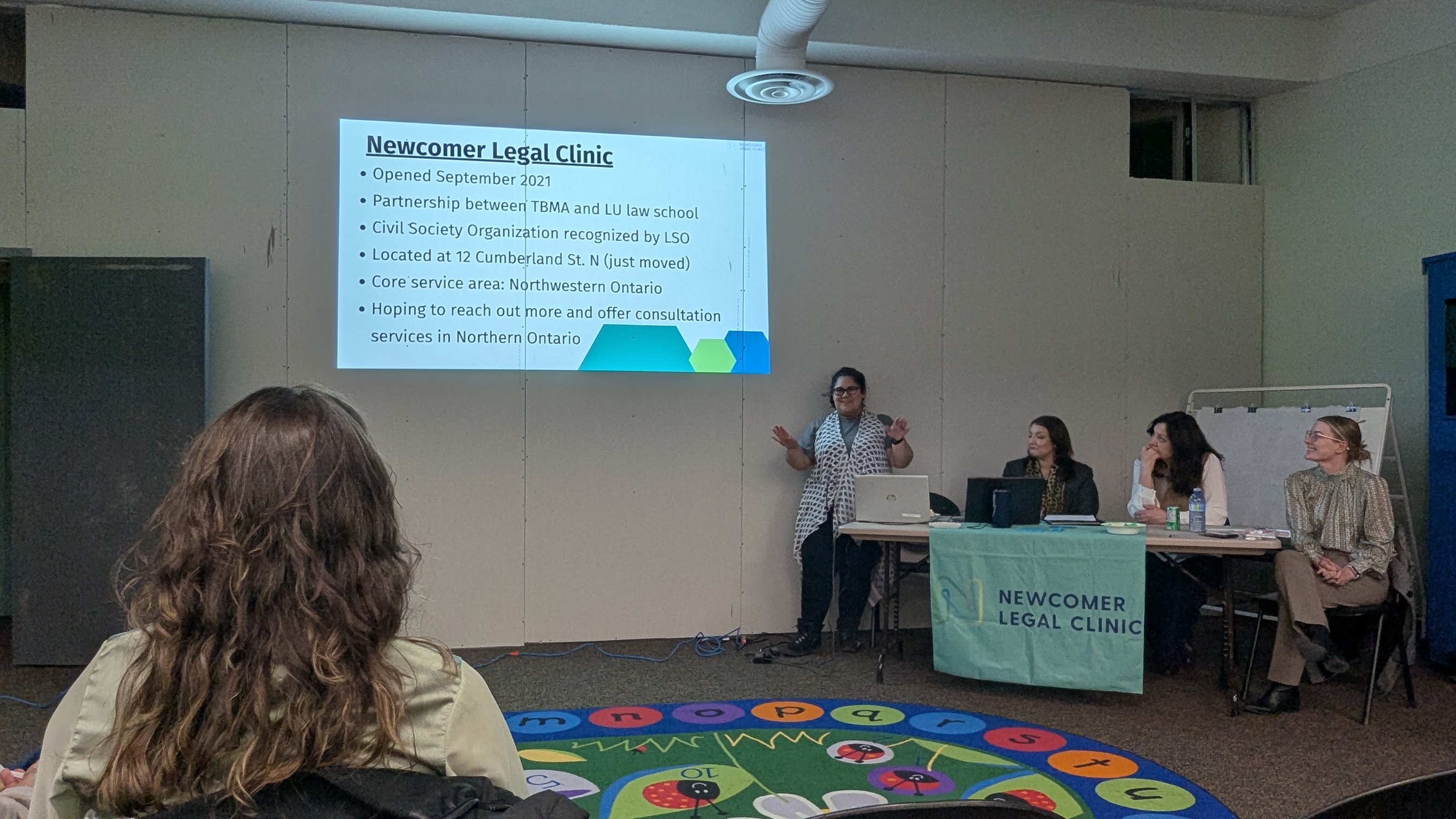
We offer free public legal education presentations online or in person to groups who would like to learn more about how the immigration, refugee, or citizenship systems work, and about the rights of migrants navigating them.
If your group or organization would like to have a presentation from us, please get in touch by emailing Bianca: outreach.nlc@lakeheadu.ca or call 807-346-7800
Resources
Free Legal Help
There are two types of programs dedicated to helping you find free legal help:
(1) legal clinics staffed by lawyers and community workers, and
(2) private lawyers who are paid by government legal aid certificates.
More information on both is provided below. If we cannot help you because we do not have capacity or because we do not practise the type of law you need help with, please try to contact these services.
Immigration and settlement services can provide you with a wide variety of supports and information depending on your needs. Please contact the settlement agency in your district to determine whether you are eligible for their services and what kind of help they can provide.
Northwestern Ontario:
- First Welcome Guide for Thunder Bay newcomers:
Thunder Bay Community Economic Development Commission (CEDC) introduces its first Welcome Guide for Thunder Bay newcomers. The guide provides essential information, resources, and community connections to help newcomers navigate their transition. The four main sections are: Thunder Bay Overview, City & Services, Shopping, and Arts & Culture.
- Thunder Bay Multicultural Association – The TBMA provides newcomer settlement services to immigrants and refugees during their first years in Canada. They provide English language instruction and testing through the LINC school, translation and interpretation, and referrals to resources in the community.
- Association des Francophones due Nord-Ouest de L’Ontario – AFNOO – It provides community support, immigration assistance, and advocacy.
- Multicultural Association of Kenora and District (MAKD) – It helps with settlement support, immigration services, employment support, language services, interpretation and translation, and referrals.
- Multicultural Association of North Western Ontario – It helps with newcomer settlement support, multicultural advocacy, regional community support, youth programs, and community access services.
Information about being a Newcomer in Northern Ontario:
- Move to Northwestern Ontario – This website is an immigration portal for economic migrants in Northwestern Ontario, with information about living, working, learning and doing business in Northwestern Ontario.
- Le Réseau du Nord – The Réseau due Nord creates links between organizations across Northern Ontario to facilitate the reception and integration of Francophone newcomers.
Northeastern Ontario:
- Centre de santé communautaire du Grand Sudbury – CSCGS
- Contact Interculturel francophone de Sudbury
- Northeastern Ontario Multicultural Centre
- Sault Community Information & Career Centre Inc.
- Sudbury Multicultural Folk Arts Association
- YMCA of Northeastern Ontario, Sudbury
Settlement Services Elsewhere in Ontario:
- MyRefugeeClaim.ca – This is a website that offers resources to help you get informed, connected, and prepared throughout your refugee claim journey.
- Meet Gary – Meet Gary is a resource for individuals who have already made their refugee claim. Gary acts as a member of the Refugee Board and helps individuals seeking refugee status to prepare for their hearing.
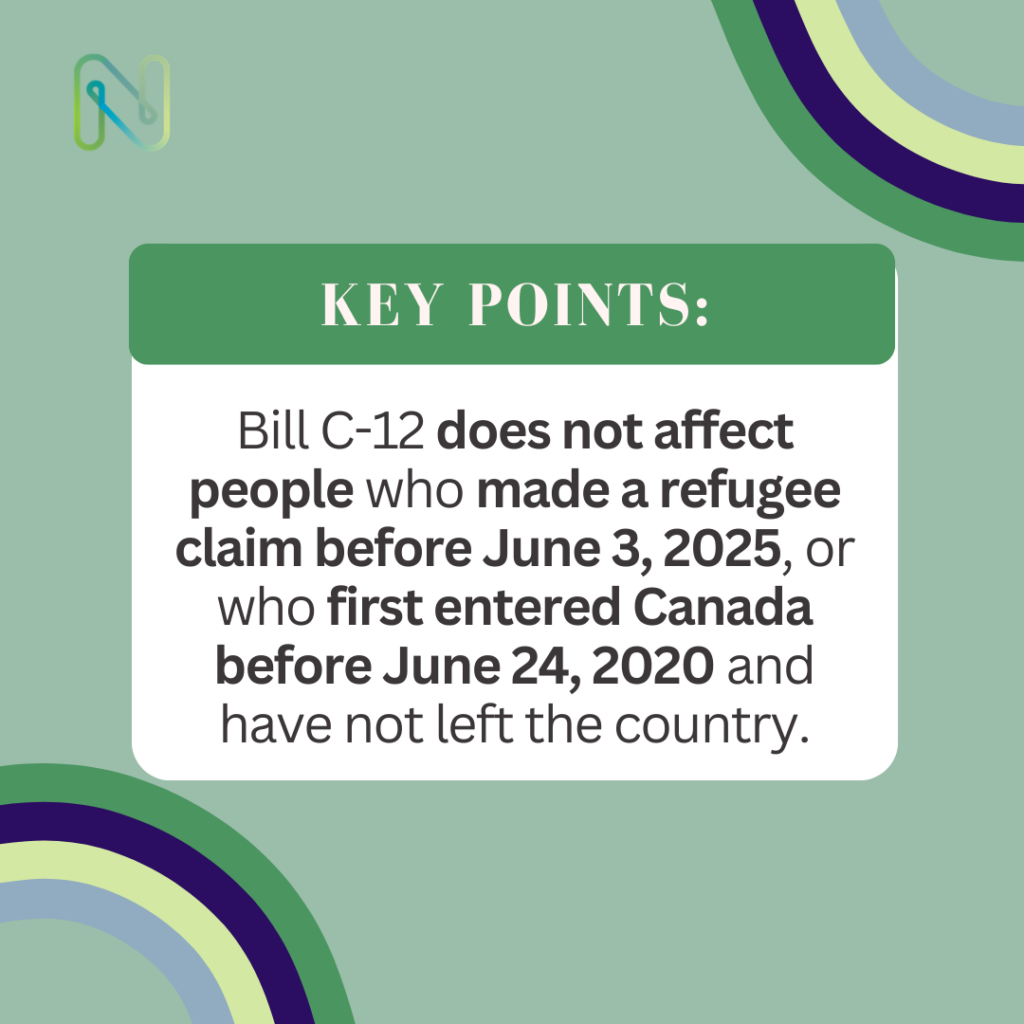
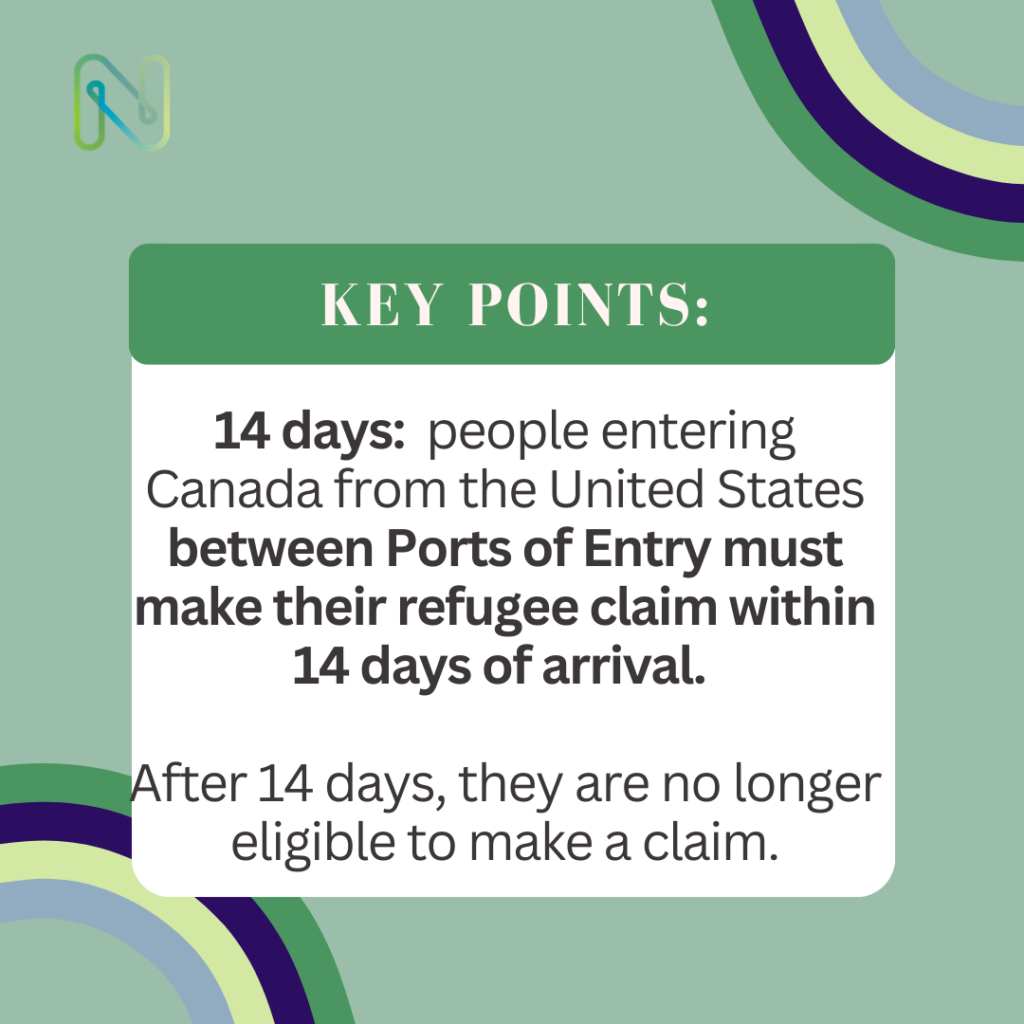
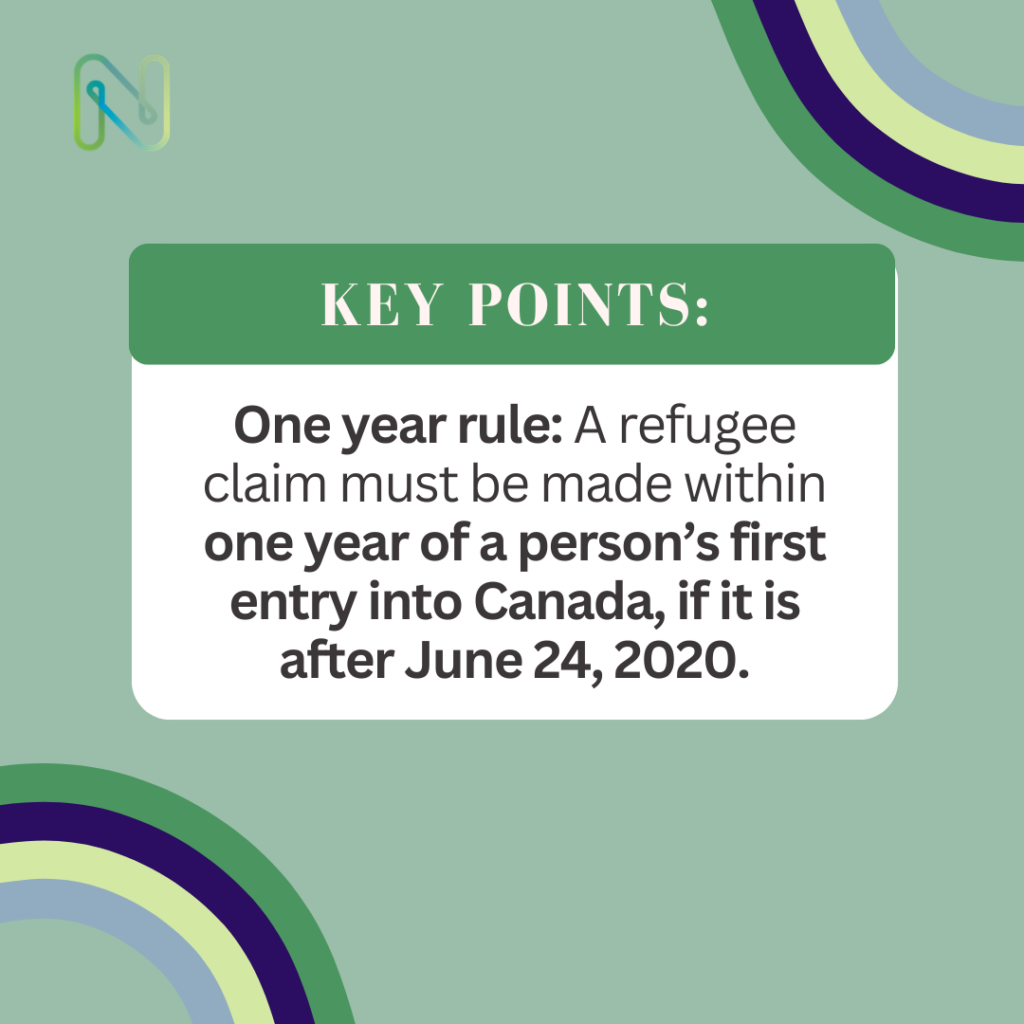
- Does Bill C-12 Affect Me? Bill C-12 came into force in March 2026, but it applies to some people who made refugee claims before that date. It bars people from making a refugee claim more than one year after they entered Canada. Also, it bars people from making a refugee claim if they entered irregularly (not at a port of entry) and are making a refugee claim after 14 days. Check this link for information on whether you are affected.
- Kinna-aweya Legal Clinic – Kinna-aweya Legal Clinic provides legal advice and support to people living in the District of Thunder Bay. They focus on Indigenous peoples and are funded by legal aid. Kinna-aweya helps people get income maintenance benefits and sustain access to housing. They also provide legal education workshops and work towards positive change.
- Lakehead University Community Legal Services (LUCLS) – LUCLS is a free legal clinic located in Lakehead University’s Faculty of Law building. Under the supervision of staff lawyers, student caseworkers offer free legal services to low income residents in Northwestern Ontario. LUCLS helps with: minor criminal offences, serious provincial offences, tenant rights, small claims court and civil disputes under $35, 000, employment law, and simple wills and powers of attorney.
- Nishnawbe-Aski Legal Services Corporation – NAN Legal provides legal, paralegal, public legal education, and law reform services to the members of the Nishnawbe Aski Nation.
- The Northwest Community Legal Clinic – The Northwest Community Legal Clinic is a not-for-profit organization serving low-income residents in the Kenora and Rainy River Districts.
- Find other community legal clinics using Legal Aid Ontario’s clinic look-up form.
- HIV & AIDS Legal Clinic Ontario – HALCO is a charitable not-for-profit community-based legal clinic that provides free legal assistance to people living with HIV/AIDS throughout Ontario.
- South Asian Legal Clinic Ontario – SALCO is a not-for-profit legal clinic funded by Legal Aid Ontario. SALCO works with low-income South Asians across Ontario in a number of areas of poverty law.
- Chinese and Southeast Asian Legal Clinic – CSALC offers advice and representation to low-income, non-English speaking members of the Chinese, Vietnamese, Laotian, and Cambodian communities throughout Ontario.
- Justice for Children and Youth – A child rights legal clinic that offers information, summary advice, referrals, and representation to youth across Ontario.
- Refugee Law Office – Legal Aid Ontario’s Refugee Law Office helps clients prepare claims for refugee status at refugee determination hearings before the Immigration and Refugee Board.
- BLAC Legal Action Centre – BLAC offers a range of legal services on issues related to education, employment, housing, human rights, government support, and other topics.
- Human Rights Legal Support Centre – The Human Rights Legal Support Centre is now offering services in Thunder Bay. You can contact the Centre toll free at 1-866-625-5179 for advice and help with starting a human rights application.
- Centre for Spanish Speaking Peoples – This is not-for-profit legal clinic that provides free legal services to Spanish speaking newcomers. They also offer support to women of have been in exposed to violence in their relationships.
- Childhood Arrivals Support and Advocacy – CASA supports young people who were brought to Canada as children and are living in Ontario with precarious or no immigration status (sometimes referred to as “undocumented” or “non-status”). CASA supports clients to understand and navigate the options available to them to regularize their immigration status, while connecting them with services and education to assist in pursuing their personal goals.
- Canada-US Border Clinic – The Canada-US Border Clinic is a free legal clinic that provides help to people seeking safety at the Canada-US border. They offer information and legal advice to migrants and their advocates. All our services are provided by phone and video.
Legal Aid Ontario Certificates Program: Some newcomers will be eligible for a Legal Aid certificate to hire a private lawyer to represent them in their immigration procedure. Eligibility for legal aid depends on your income, your assets and savings, and the type of legal problem you have. Legal aid certificates are limited to certain types of criminal charges, certain types of family law situations, refugee claims inside Canada, pre-removal risk assessments (PRRA), some deportation situations, and some situations involving family violence and human trafficking. Consult these websites for more information and to apply:
- Apply for legal aid: Phone 1-800-668-8258 or apply online. A settlement worker or other community helper may be able to help you fill out the form and make the phone call.
- Find a lawyer who accepts legal aid certificates: Use this website to look up lawyers who accept legal aid certificates. There are no lawyers in Northern Ontario who accept immigration or refugee legal aid certificates. Most lawyers will provide help over the phone or by video.
- More information about Refugee and Immigration Legal issues.
Select the community that you live in. Please note: there are very few lawyers in Northwestern Ontario who practise immigration law, so it will be best to use these links if you are looking for a lawyer who practises another area of law (e.g. criminal, human rights, employment, wills and estates).
- Thunder Bay Law Association
- Kenora Law Association (Kenora, Dryden, Sioux Lookout)
- Rainy River District Law Association (Fort Frances, Rainy River, Atikokan)
- Sudbury Law Association
- Algoma District Law Association (Sault Ste Marie, Wawa, Eliot Lake)
- Cochrane District Law Association (Timmins, Cochrane, Kapuskasing, Hearst)
- Timiskaming District Law Association (Kirkland Lake and area)
- Law Society Referral Service – The Law Society has a service that assists people in finding a lawyer in the correct area of law. This service is called the Law Society Referral Service. A phone call to the toll-free number at 1-855-947-5255 will give you the name and phone number of a lawyer who will provide you with a 30-minute free consultation.
Use these links to find lawyers in cities across Canada who practise immigration and refugee law. Note that most lawyers will be able to work with you over video and phone to prepare your case.
- Canadian Bar Association, Immigration Lawyers: A list of immigration lawyers across Canada who are members of the Canadian Bar Association.
- Canadian Association of Refugee Lawyers: A list of refugee lawyers across Canada.
- Canadian Immigration Lawyers Association: List of immigration lawyers across Canada who are members of the Canadian Immigration Lawyers’ Association
Colleges and Universities have international student departments that help their students navigate immigration processes, particularly those related to study permits and post-graduation work permits. These services are free because they are included in student fees. International students should consult their advising programs before paying for or seeking free legal help elsewhere.
- Lakehead International Student Advising – Lakehead University provides free immigration advice from authorized immigration representatives to international students accepted to and attending Lakehead University. They also offer weekly drop in hours via Zoom.
- Confederation College International Student Advising – Confederation College has International Student Advisors available to help students registered at the College with immigration issues.
Government of Canada websites contain the most accurate and up-to-date information about immigration and refugee laws and programs. Some websites try to imitate government website. Be sure that the website you are using is a canada.ca or a gc.ca site. Do not send any personal information about yourself or money to websites if you are not sure whether they are authorized government websites.
- Immigration, Refugees, and Citizenship Canada – This is the official website of the Department of Immigration, Refugees, and Citizenship Canada. It is the most reliable source of information about how to travel, study, work, or immigrate to Canada.
- IRCC Program search questionnaire – this is a 1 minute questionnaire that might help you explore and narrow down your immigration options. Please note that the questionnaire is not an application and IRCC won’t make any immigration decision based on your answers. Additionally, they won’t consider any result you get through this questionnaire in their decision.
- IRCC Permanent Residence Programs – Use this page if you are looking for options to remain in Canada permanently.
- IRCC Operational Instructions and Guidelines – Use this website to find the instructions IRCC officers receive about how to process immigration applications. These instructions are not law, but they can be relied on for information about what IRCC is looking for in your application and the process to expect.
- Canada Border Services Agency – This is the official website of Canada Border Services Agency, the department responsible for enforcing immigration rules inside Canada and at its borders.
- The Immigration and Refugee Board of Canada – This is the official website of the Immigration and Refugee Board of Canada, which includes the Immigration Division, the Immigration Appeal Division, the Refugee Protection Division, and the Refugee Appeal Division.
- Labour Market Impact Assessments – Employers looking to hire foreign workers and who need a labour market impact assessment can find more information here. Only employers can apply for labour market impact assessments. Employees cannot apply, and they cannot be made to pay any of the legal or processing fees associated with the application. Employers who require or allow their employees to pay for an LMIA may be committing an offence.
- IRCC Portals and Accounts – IRCC has many portals for applicants, depending on the kind of application they want to make. Consult this link for a directory of IRCC portals.
- CanLII – Free access to Court and Immigration and Refugee Board decisions about immigration, refugee, and citizenship law. Commentary and law journals are also available.
- Program Delivery Updates
Rural and Francophone Community Immigration Pilot Program Websites:
- Rural Community Immigration Pilot – Thunder Bay page – The RCIP is an employer-driven federal immigration program that helps rural and remote communities across Canada attract skilled workers. It connects local employers with eligible candidates and offers a pathway to permanent residency to support regional labour needs. This is the page with specific information about Thunder Bay’s RCIP program. Each participating community has its own website.
- Rural Community Immigration Pilot – IRCC page – This has information about how IRCC selects and processes people for permanent residence under the RCIP program once they have been nominated by their local community. It also has information on how to apply for the RCIP work permit.
- List of RCIP participating communities – find out if your community is participating in the RCIP here.
- Francophone Community Immigration Pilot – IRCC page – This page has information about the Francophone community immigration pilot program and the communities participating in it.
- Community Legal Education Ontario – CLEO produces clear language material for people with low incomes. Main topics include social assistance, landlord and tenant law, refugee and immigration law, workers’ compensation, women’s issues, family law, employment insurance and human rights. Most publications are available in French, and some are available in other languages. All of their publications are free, and there is no charge for delivery.
- Your Legal Rights Main – This website has a collection of legal information resources produced by hundreds of organizations across Ontario. These include resources and webinars for community workers produced by CLEO and other organizations.
- Law Society Referral Service – The Law Society of Upper Canada is the body that governs all lawyers in Ontario. The Law Society also has a service that assists people in finding a lawyer in the correct area of law. This service is called the Law Society Referral Service. A phone call to the toll free number at 1-855-947-5255 will give you the name and phone number of a lawyer who will provide you with a 30-minute free consultation.
- Human Rights Legal Support Centre – The Human Rights Legal Support Centre is now offering services in Thunder Bay. You can contact the Centre toll free at 1-866-625-5179 for advice and help with starting a human rights application.
PLEASE NOTE!
1: Make sure your Ontario lawyer is authorized to practise law:
Look up your lawyer’s name in the member directory of the Law Society of Ontario. If someone tells you they are a lawyer but they are not listed here, please contact the Law Society of Ontario by phone to make sure your lawyer is authorized to help you. They can help you determine if the person is trying to scam you.
2: Paid Immigration Consultants – Advice and representation on most immigration and refugee law matters:
Immigration Consultants are only authorized to charge money for giving you advice or preparing an immigration or refugee application on your behalf if they are members of the Canadian College of Immigration Consultants. They should be able to provide you with their “RCIC number”. Note that immigration consultants cannot help you challenge a refusal decision in Federal Court. If you need to go to Federal Court, you will need a lawyer or to represent yourself.
More information: Canadian College of Immigration Consultants
Bill C-12 made law and changes to the Asylum system
On March 26, Bill C-12 received royal assent and became law.
In general, if a person enters Canada after June 24, 2020, and has been here for more than one-year, they will be ineligible to have their claim referred to the Refugee Protection Division for a hearing. This will prevent them from making a refugee claim inside Canada.
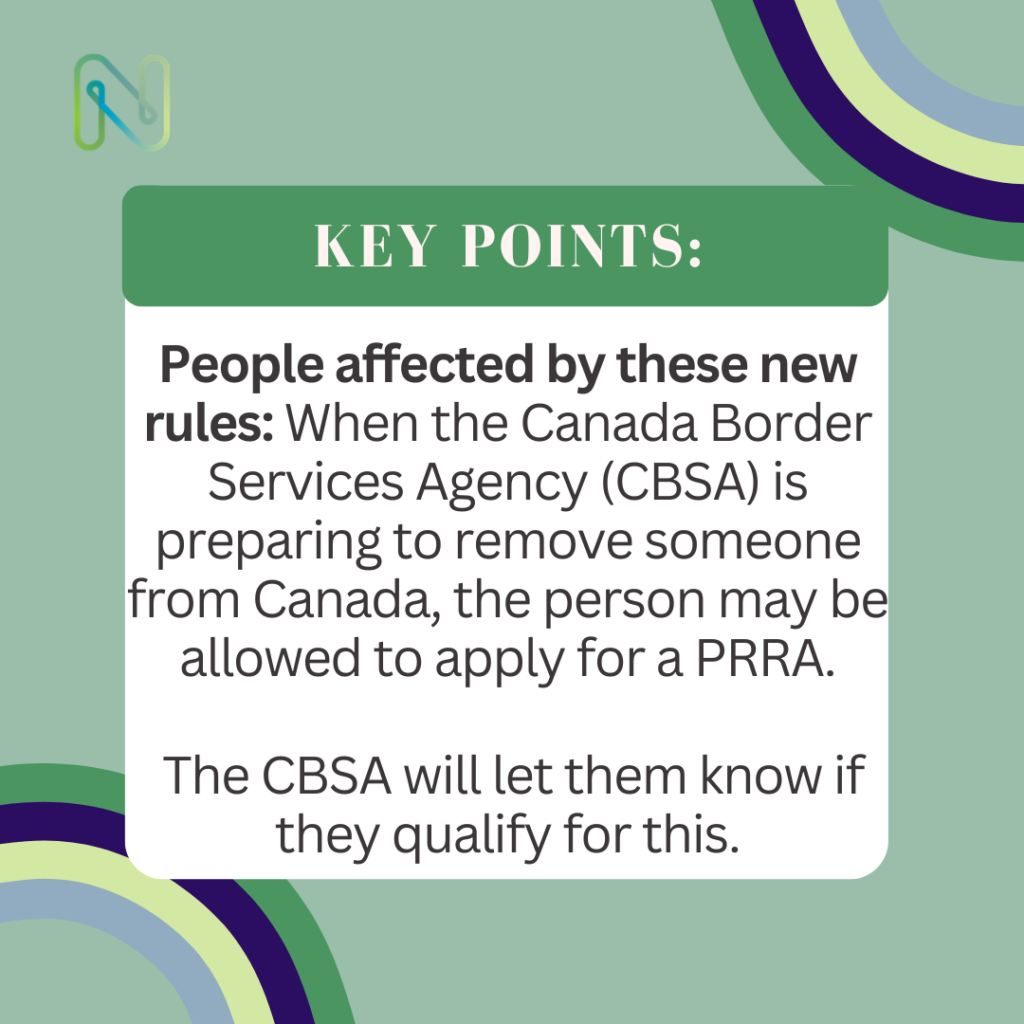
If they make a claim when they are ineligible, they will normally face removal from Canada and will be redirected towards a Pre-Removal Risk Assessment (PRRA). In the removal process, the Canada Border Services Agency (CBSA) may assess whether they qualify for a PRRA, which is a written application explaining the risks they would face if they return to their country. If approved, they may receive protected person status and become eligible to apply for permanent residence.
When a person applies for a PRRA, their removal from Canada will be paused until a decision is made on their application. People who are inadmissible or whose refugee claim was rejected for exclusion issues should seek legal advice.
By the Migrant Rights Network. See the tool here.
Webinar about Changes to the Refugee Process: How Bill C-12 Will Affect you by FCJ Refugee Centre. Watch the video here
Temporary Public Policy on Open Work Permits for People with Ineligible Refugee Claims: The policy helps certain refugee claimants affected by Bill C-12 keep or obtain a work permit even after their claim is found ineligible for referral to the Refugee Protection Division or when they no longer have an active refugee claim. This temporary measure allows them to continue working in Canada while they wait for further immigration decisions, such as a Pre-Removal Risk Assessment (PRRA).
Review the conditions (eligibility requirements) here.